Post-Brexit E-Commerce Email Marketing: What UK Brands Need to Know in 2026
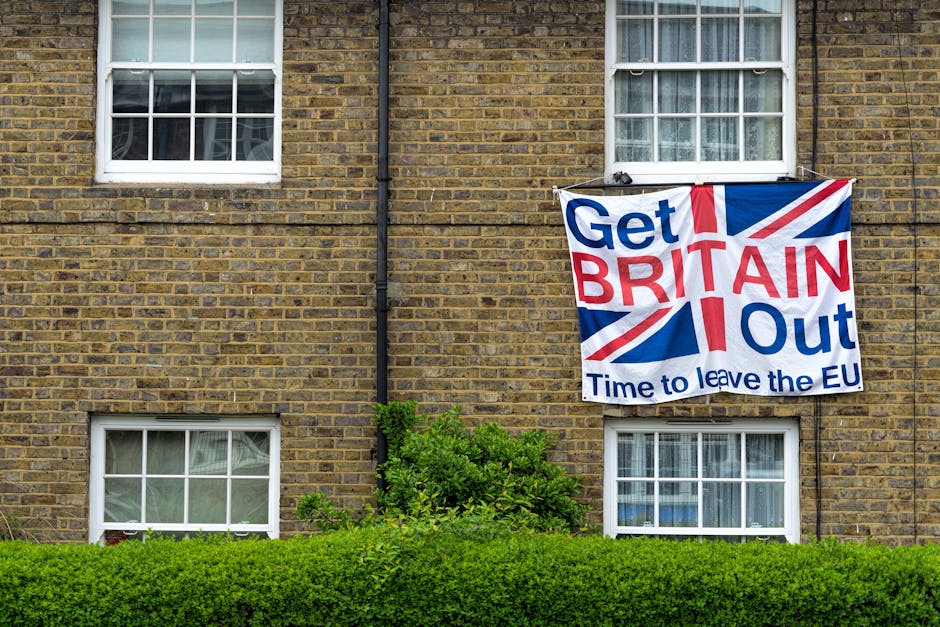
Brexit created a data protection divergence that most UK e-commerce brands still haven’t fully addressed. Since the UK left the EU’s single data protection framework on 31 January 2020, UK brands have been operating under a dual system: UK GDPR for UK customers, and EU GDPR for EU customers — with different enforcement authorities, different international transfer rules, and in some areas, increasingly different interpretations of what compliance requires.
For UK e-commerce brands running email marketing programmes, this complexity has practical implications — particularly if you’re selling to customers in EU member states, using US-based ESPs, or considering whether your existing consent processes need updating.
This guide covers the post-Brexit email marketing compliance landscape for UK brands in 2026.
The UK GDPR: What Changed and What Didn’t
When the UK left the EU, it retained the substance of EU GDPR through the Data Protection Act 2018, creating what became known as “UK GDPR.” For most practical purposes — consent requirements, data subject rights, data minimisation principles — UK GDPR and EU GDPR are near-identical.
What changed:
Enforcement authority. EU GDPR is enforced by national data protection authorities (DPAs) in each EU member state — the CNIL in France, the BfDI in Germany, the DPC in Ireland. UK GDPR is enforced by the Information Commissioner’s Office (ICO). If you’re a UK brand with a UK customer base, the ICO is your regulator.
International data transfers. The rules for transferring personal data out of the UK changed at Brexit and again with subsequent legislation. This is one of the most practically relevant changes for UK brands using US-based ESPs.
Divergence risk. The UK government has indicated appetite for reforms to UK GDPR — particularly through the Data (Use and Access) Act 2025. While the substance of consent requirements has remained stable, UK brands should monitor ICO guidance for any evolving interpretations.
What didn’t change:
The fundamental principles of lawful email marketing remain identical: you need a lawful basis to process subscriber data, you need consent (or the soft opt-in exception under PECR) to send marketing emails, you must honour data subject rights, and you must maintain consent records.
If You Sell to EU Customers: Dual Compliance
UK brands that sell to customers in EU member states are subject to both UK GDPR (as the controller established in the UK) and EU GDPR (as a controller offering goods or services to data subjects in the EU under Article 3 of EU GDPR).
This means:
You may need an EU representative. Article 27 of EU GDPR requires organisations not established in the EU that process EU personal data to appoint an EU representative. If you have meaningful numbers of EU customers (not just occasional incidental sales), you technically should have this in place.
Your privacy policy must address both. If you’re processing data from both UK and EU subjects, your privacy policy should indicate the lawful basis under both frameworks. In practice, these are near-identical, but the framing should be clear.
EU DPAs can investigate you. The CNIL, DPC, or any EU DPA can investigate a UK brand that processes EU personal data and appears to be in breach of EU GDPR — even though the ICO is your primary regulator. This is a separate and parallel enforcement risk.
Marketing consent requirements are the same. EU GDPR does not have a direct equivalent of the UK’s PECR soft opt-in rule — so the email marketing consent requirements under EU GDPR are, if anything, stricter. Explicit opt-in consent is required for marketing emails to EU consumers. If your consent process already meets UK GDPR/PECR standards, it should also meet EU GDPR requirements for most purposes.
International Data Transfers: The ESP Problem
This is where most UK brands have a live compliance risk they haven’t addressed.
The major email service providers — Klaviyo, Mailchimp, HubSpot, ActiveCampaign, Brevo — are incorporated and process data in the United States. When you collect a UK subscriber’s email address and it syncs to your ESP, you’re transferring personal data from the UK to the US.
Under UK GDPR, international data transfers to countries without an adequacy decision (the US does not have full adequacy) require an appropriate safeguard. The primary mechanism post-Brexit is Standard Contractual Clauses (SCCs) — specifically the UK International Data Transfer Agreement (IDTA) or the UK Addendum to the EU SCCs.
What this means in practice:
The good news: all major ESPs have addressed this. Klaviyo, Mailchimp, HubSpot, ActiveCampaign, Omnisend, Dotdigital, and Brevo all have Data Processing Agreements (DPAs) that include the UK IDTA or UK Addendum as the mechanism for UK-to-US data transfers.
The not-so-good news: these DPAs do not apply automatically. You must actively accept them. If you set up your ESP account, integrated it with Shopify, and started sending emails without explicitly accepting your ESP’s DPA, you are technically processing personal data without an adequate transfer mechanism.
Action required for UK brands:
- Log into your ESP account
- Locate the Data Processing Agreement or Privacy/Legal settings
- Confirm whether the UK IDTA or UK Addendum to SCCs is included
- Accept the DPA formally and document the acceptance date
On Klaviyo: Settings > Legal > Data Processing Agreement. On Mailchimp: Manage Account > Extras > Agreement Centre. On HubSpot: Settings > Data Privacy > Data Processing Agreement. On ActiveCampaign: Contact ActiveCampaign directly or check their trust portal. On Dotdigital: Account settings include a DPA acceptance process. On Omnisend: Available in account settings under Legal. On Brevo: Available in the account legal section.
If your ESP does not offer a UK IDTA or UK Addendum, contact them to request updated documentation. Post-Brexit UK compliance requires updated transfer agreements, not just EU model clauses.
The EU Adequacy Decision: What It Means
In June 2021, the European Commission granted the UK an adequacy decision — a finding that the UK provides an “essentially equivalent” level of data protection to the EU. This adequacy decision allows personal data to flow freely from the EU to the UK without additional transfer mechanisms.
What this means for UK e-commerce brands:
If you receive personal data from EU-based customers (for example, because a French customer buys from your UK Shopify store), that data can flow from the EU to your UK-based systems without additional safeguards, because of the adequacy decision.
However, this adequacy decision is not permanent. It was granted with a sunset clause and is subject to review. The EU has explicitly stated that any significant divergence between UK GDPR and EU GDPR could trigger a review of adequacy.
UK brands should not build their data governance strategy on the permanence of the adequacy decision. The infrastructure for UK-to-US transfers (via SCCs/IDTA) should be in place regardless.
PECR: The UK-Specific Layer
PECR (Privacy and Electronic Communications Regulations) is a UK-specific piece of legislation — it was not retained from EU law at Brexit but has its own UK lineage. There is no exact EU equivalent of PECR’s soft opt-in rule, making PECR a distinctly UK compliance consideration.
Key PECR points for post-Brexit UK e-commerce brands:
PECR applies to UK-based senders marketing to UK recipients. If you’re a UK brand emailing UK customers, PECR applies. Full stop.
Marketing to EU recipients doesn’t require PECR compliance — it requires EU GDPR compliance, which generally means explicit consent (without the soft opt-in exception). So if your email list includes EU subscribers, your consent process for them should not rely on PECR’s soft opt-in.
PECR is enforced by the ICO. Breaches of PECR can result in fines of up to £500,000 under current PECR regulations (separate from the higher fines possible under UK GDPR).
Consent Obtained Before Brexit: Is It Still Valid?
Many UK e-commerce brands built their email lists before or during the Brexit transition period (ending 31 December 2020). Are consent records obtained before Brexit still valid under UK GDPR?
The general position from the ICO and data protection practitioners is: yes, pre-Brexit consent remains valid, provided it met the standards required at the time. The EU GDPR consent standard (from May 2018 onwards) and the UK GDPR consent standard are effectively identical, so consent that was valid under EU GDPR on 31 December 2020 remained valid under UK GDPR from 1 January 2021.
However, this applies only to consent that was genuinely GDPR-compliant in the first place. Many brands collected email addresses before May 2018 with pre-GDPR, lower-standard consent mechanisms. Those older records are likely non-compliant regardless of Brexit.
If you have email subscribers on your list who have been there for more than four years with no engagement and no renewed consent interaction, these are the most legally vulnerable records on your list — regardless of Brexit.
The Data (Use and Access) Act 2025: What Changed
The UK’s Data (Use and Access) Act 2025 made several modifications to the UK data protection landscape. For e-commerce email marketing purposes, the most relevant changes are:
Legitimate interest balancing test. The Act clarified and in some areas expanded the circumstances under which legitimate interest can be used as a lawful basis. For email marketing, this primarily affects B2B marketing (business-to-business emails are not covered by PECR’s consent requirement in the same way as B2C). For B2C e-commerce email marketing, consent and the soft opt-in rule remain the primary mechanisms.
Cookie and tracking consent. The Act introduced some updates to cookie consent requirements that affect email tracking (open pixels). The practical impact on email open tracking for UK e-commerce brands is modest — you should continue to disclose pixel-based open tracking in your privacy policy.
Record keeping. The Act maintained the requirement to keep records of processing activities, including consent records for email marketing.
For most UK DTC e-commerce brands running a standard email marketing programme, the Data (Use and Access) Act 2025 does not require fundamental changes to existing GDPR-compliant processes. If you were already running a properly structured programme, your compliance foundations remain sound.
Practical Steps for UK E-Commerce Brands in 2026
Based on the above, here are the concrete actions UK e-commerce brands should take to ensure their email marketing is post-Brexit compliant:
-
Accept your ESP’s DPA — specifically the version containing the UK IDTA or UK Addendum. Do this today if it’s not already done.
-
Review your privacy policy — ensure it addresses both UK GDPR and EU GDPR if you have EU customers. Include the lawful basis for international transfers.
-
Audit your subscriber consent records — can you demonstrate when, how, and for what purpose every active subscriber on your list consented? If not, this is your most urgent compliance gap.
-
Segment UK and EU subscribers — if you have meaningful EU subscriber volumes, ensure your consent processes meet EU GDPR standards (not just UK PECR soft opt-in).
-
Prepare for adequacy decision changes — don’t assume EU-to-UK data flows will always be adequacy-covered. Build your data architecture to accommodate additional safeguards if needed.
-
Monitor ICO guidance — the ICO publishes updated guidance on data protection law regularly. Bookmark ico.org.uk and review it quarterly.
-
Work with a GDPR-aware agency — if you use an email marketing agency, ensure they have UK GDPR expertise and have accepted a DPA with you. Excelohunt maintains DPAs with all UK clients and builds compliance into every programme across Klaviyo, ActiveCampaign, HubSpot, Dotdigital, Mailchimp, Omnisend, and Brevo.
Conclusion
Post-Brexit email marketing compliance is not as complex as it might initially appear — but it does require attention to the specific UK GDPR and PECR framework rather than generic “GDPR compliance” approaches. The most common gaps for UK brands are: unsigned DPAs with US-based ESPs, stale or poorly-documented consent records, and inconsistent handling of EU vs UK subscribers.
The brands who have addressed these issues are operating from a position of confidence. Those who haven’t are carrying legal and commercial risk that doesn’t need to exist. The fixes are mostly procedural, not technical — and they’re achievable in a focused compliance review.
Want Us to Implement This for Your Brand?
Get a free email audit and see exactly where you're losing revenue.
Get Your Free Audit