Email Marketing for US Supplements & Nutrition Brands: Compliance, Flows & Revenue
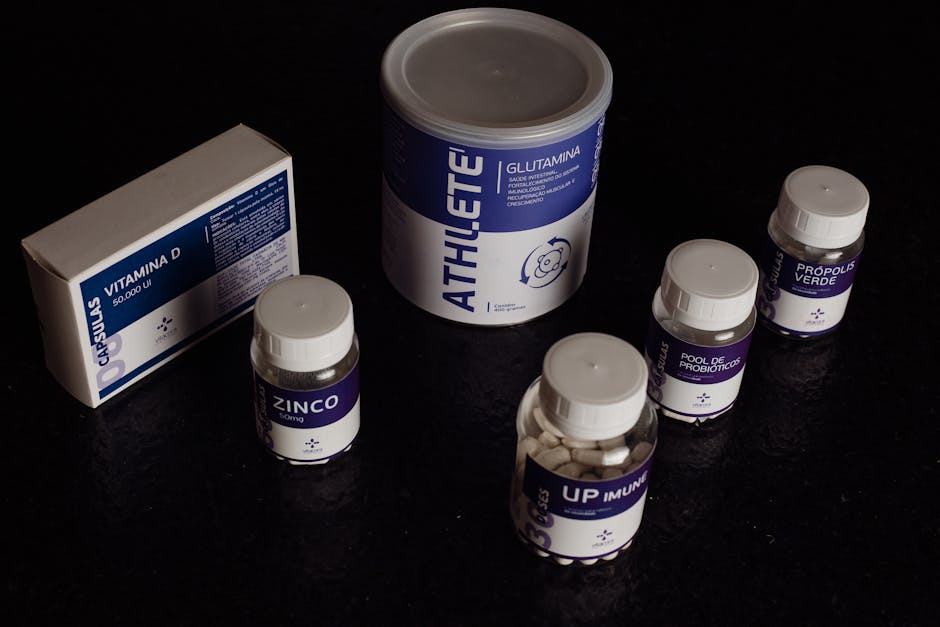
The US supplements and nutrition market is one of the highest-repurchase categories in e-commerce. Customers who find a product that works buy it every 30, 45, or 60 days like clockwork. Email is your primary tool for ensuring they buy it from you rather than Amazon.
But supplements email marketing in the US comes with a compliance layer that other categories do not have. The Federal Trade Commission (FTC) regulates health claims aggressively. Get the language wrong in an email subject line and you can trigger regulatory scrutiny, ad platform bans, and consumer trust problems.
This guide covers both sides: the compliance framework you cannot ignore, and the email strategy that drives serious revenue.
The Compliance Foundation
FTC Health Claims Rules
The FTC requires that all health claims in marketing — including email — be truthful, not misleading, and backed by competent and reliable scientific evidence. For supplements, this means:
Structure/function claims are permitted with caveats. You can say a product “supports immune health” or “helps maintain healthy energy levels” — these describe how the supplement affects normal structure or function without claiming to diagnose, cure, treat, or prevent disease.
Disease claims are not permitted for supplements. Saying a supplement “cures insomnia,” “prevents cancer,” or “treats depression” crosses from supplement marketing into drug marketing, which requires FDA approval. Even implying these outcomes through carefully worded language is a risk.
Testimonials require substantiation. Customer testimonials about results must reflect typical results or be clearly disclaimed. “Results not typical” is not a magic phrase that makes any claim permissible — the FTC has made clear that even disclaimed testimonials must meet substantiation requirements.
“As seen in” and endorsement claims. Any implied endorsement by a medical professional or scientific institution must be genuine and current.
CAN-SPAM Compliance
Every commercial email sent to US recipients must comply with CAN-SPAM:
- Your physical mailing address must appear in every commercial email
- Subject lines cannot be deceptive or misleading
- Clear identification that the message is an advertisement (if it is)
- An easy, functional unsubscribe mechanism that processes opt-outs within 10 business days
- Opt-outs must be honoured — you cannot email someone who has unsubscribed
In practice, every major ESP (Klaviyo, ActiveCampaign, Omnisend, Mailchimp, HubSpot) makes CAN-SPAM compliance straightforward through their footer templates. Use them.
Practical Email Language Rules for Supplements
Train your copywriters and yourself to follow these rules:
Use: “Supports,” “helps maintain,” “may help with,” “promotes,” “is formulated to” Avoid: “Cures,” “treats,” “eliminates,” “proven to,” “clinically proven to treat” (unless you have actual clinical trial data for that specific product)
Use: “Many customers report feeling…” with explicit result disclaimer Avoid: Presenting extreme testimonials as typical outcomes
Use: Ingredient-level claims backed by published research Avoid: Claims that go beyond what the research actually shows
When in doubt, run email copy past a regulatory attorney or compliance consultant before sending. The cost of one review is a fraction of the cost of an FTC inquiry.
The Email Flow Stack for Supplements Brands
1. Welcome Series (5–6 emails over 10–14 days)
Your welcome series for a supplements brand needs to do more than pitch products — it needs to build trust and educate. Supplement purchases are partly rational (does this product work?) and partly emotional (will this brand take care of me?).
- Email 1 (Immediate): Welcome, deliver signup offer, set expectations. Keep health claims compliant.
- Email 2 (Day 2): Brand story and sourcing. Where do your ingredients come from? What quality standards do you hold yourself to? Third-party testing? This content is high-trust and differentiating.
- Email 3 (Day 4): Education on your hero ingredient or product category. Teach them why what you sell matters — with citations to real research. This establishes authority.
- Email 4 (Day 7): Social proof — customer stories (with appropriate disclaimers), reviews, transformation narratives framed carefully.
- Email 5 (Day 10): Product-specific email with usage guidance, how to get the best results, what to pair with what.
- Email 6 (Day 14): Final conversion push for non-purchasers with any remaining welcome offer.
2. Abandoned Cart (3 emails)
Supplements have a particularly high cart abandonment rate driven by price hesitation and comparison shopping. Your abandoned cart sequence needs to address the common objections:
- Email 1 (1 hour): Simple reminder, strong product imagery, clear benefits (compliant language).
- Email 2 (24 hours): Address hesitation — quality guarantees, return policy, third-party testing certs, subscription discount availability.
- Email 3 (72 hours): Stronger incentive if cart value warrants it. Potentially offer a starter/sample option at lower price point.
3. Post-Purchase Onboarding (Critical for Supplements)
This is the most important flow that most supplement brands underinvest in. A customer who buys your protein powder and does not know how to use it properly, sees no results in 30 days, and never hears from you again will not buy again.
Your post-purchase onboarding should run for 45–60 days after first purchase:
- Day 1: Order confirmation + what to expect. When will they receive it, what does success look like.
- Day 3–5: “It’s on its way” + preparation content. How to take it, when, with what, lifestyle factors that support results.
- Day 10–14 (after estimated delivery): Check-in. How are you finding it? Early results content. Invite to review.
- Day 21: Usage optimisation. Advanced tips, stacking with complementary products.
- Day 30: Replenishment trigger. Most supplements last 30 days. “Running low?” email before they run out.
- Day 45: Subscription or bundle offer. If they have repurchased, invite them to subscribe and save.
- Day 60: Win-back trigger if they have not reordered.
4. Replenishment Flow (The Revenue Engine)
For supplements with a predictable consumption rate, replenishment flows are pure, high-margin revenue. Build a flow that:
- Identifies the product’s expected usage cycle (30-day supply, 60-day supply, etc.)
- Sends a “running low” email 5–7 days before they are likely to run out
- Follows up 2–3 times if they do not repurchase
- Offers subscribe-and-save or bundle pricing at replenishment as a conversion incentive
A well-built replenishment flow for a supplements brand can generate 20–30% of total email revenue on autopilot.
5. Subscribe & Save Conversion Flow
If you offer a subscription option, build a dedicated flow to convert one-time buyers to subscribers after their second or third purchase. This is the highest-LTV customer state — and email is the most effective channel for getting customers there.
The case for subscribing is: convenience, never running out, and meaningful savings. Make this case clearly and repeatedly after first purchase.
6. Educational Drip Sequence
Supplements email benefits from a longer-term education sequence that is not purely sales-focused. A 30–90 day educational drip covering:
- Ingredient spotlights and the research behind them
- Lifestyle content relevant to your customer (training, sleep, nutrition, stress management)
- Brand values content (sourcing, sustainability, testing)
- New research or product development updates
This content maintains engagement and builds the authority that drives repeat purchase and word-of-mouth.
7. Win-Back Flow
Target customers who have not reordered in 60–90 days (depending on your product’s typical cycle). The key question to address: why did they stop? Was it price? Did the product not work? Did they forget?
Your win-back sequence should:
- Re-state product benefits compliantly
- Address the most common objections to re-purchase
- Offer an incentive to return
- Exit them from active sending if they remain unresponsive
Segmentation Strategy for Supplements
By Product Line
If you sell across categories (protein, vitamins, pre-workout, sleep, etc.), segment by what each customer has purchased and focus your sends on their demonstrated interests. A whey protein buyer may not be interested in collagen until you educate them on why they should be.
By Subscription Status
Active subscribers should receive different email treatment than one-time buyers. They are your highest-value customers — treat them that way with exclusive content, loyalty rewards, and early access to new products.
By Purchase Frequency
One-time buyers, two-time buyers, and 3+ purchase buyers all have different relationships with your brand and different propensity to respond to specific email triggers.
By Engagement
The supplement category skews toward older buyers who may open email less frequently than younger DTC categories. Monitor your engagement segments carefully and adjust frequency accordingly.
Platform Considerations
For US supplements brands, the primary ESP choices are:
- Klaviyo: Best for Shopify-based supplements brands with $1M+ revenue. Superior segmentation, replenishment flow logic, and CLV tracking.
- ActiveCampaign: Strong for brands with complex B2C and B2B channels, wholesale, or practitioner distribution.
- Omnisend: Competitive for mid-market brands seeking Klaviyo-level e-commerce features at lower cost.
- HubSpot: Enterprise-grade choice for larger brands running integrated CRM alongside email.
- Mailchimp: Only appropriate for very early-stage brands. Outgrown quickly as flows and segmentation become central.
At Excelohunt, we build supplements email programmes across all platforms and are well versed in managing compliant health copy across ESP environments.
Metrics to Track
- Replenishment rate: What percentage of customers repurchase before running out vs churning?
- Subscription conversion rate: What percentage of repeat buyers convert to subscribe-and-save?
- Revenue per subscriber: Total email-attributed revenue divided by total active subscribers
- Post-purchase open rate: A high post-purchase open rate indicates strong onboarding content and engaged customers
- Churn-by-cohort: Track customers who stop buying by acquisition month to identify patterns in your onboarding or product experience
What Most Supplements Brands Get Wrong
- Compliance gaps in automated flows — copy written before compliance review is applied to flows that then run for months without update
- No replenishment flow — the single highest-ROI flow for supplements and the most commonly missing
- Generic post-purchase sequence — sending an order confirmation and then nothing until a win-back 90 days later
- Over-indexing on acquisition content — supplements email programmes need to be as focused on retention as acquisition
- Ignoring the education opportunity — brands that teach their customers build trust that converts to subscription and repeat purchase
Building a Sustainable Email List for Supplements Brands
List quality matters more in supplements than in almost any other e-commerce category. Supplement customers who opt in because they care about health and wellness are far more likely to engage, purchase, and subscribe than subscribers acquired through generic coupon sites or bought from third-party sources.
Focus your list building on channels that attract genuinely interested subscribers:
Educational lead magnets — a free guide to protein intake, a supplement stack recommendation tool, a quiz that identifies which supplements match their health goals. These attract people who are already interested in what you sell.
Post-purchase opt-in capture — customers who just bought from you are your warmest possible new subscribers. Make it easy and compelling to opt in at checkout and on the post-purchase thank you page.
Social and content traffic — if you are producing content around health, fitness, nutrition, or wellness topics, that audience is pre-qualified for supplement offers. Convert that traffic to email subscribers through content upgrades and gated resources.
Partnerships with complementary brands — co-promotion with fitness brands, wellness coaches, or health-focused publishers can generate high-quality subscribers who share your audience’s interests.
What you should avoid: contest entries with prize draws not related to your products, pop-ups that offer discounts without any qualification filter, and any form of list purchasing or rental. These generate low-quality subscribers who increase your complaint rate, damage your deliverability, and rarely convert to buyers.
Running a US supplements or nutrition brand? Excelohunt builds compliant, high-converting email programmes for supplements brands — including FTC-aware copy, replenishment flows, and full ESP setup across Klaviyo, ActiveCampaign, Omnisend, and beyond.
Book your free email audit and find out what your email programme should be generating — and where the gaps are.
Want Us to Implement This for Your Brand?
Get a free email audit and see exactly where you're losing revenue.
Get Your Free Audit