Email Marketing for UK Luxury & Premium Brands: Building Exclusivity Through the Inbox
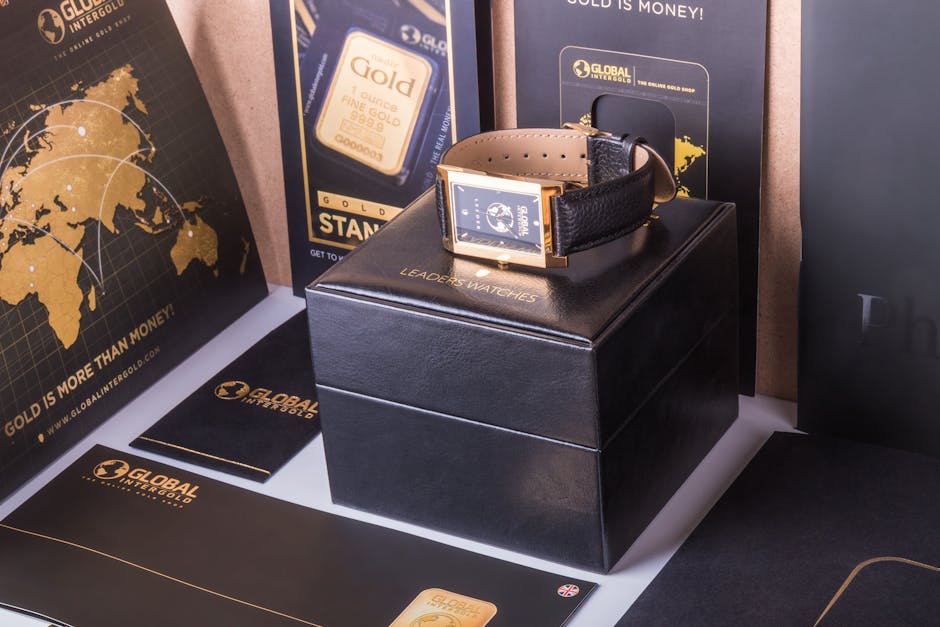
Luxury email marketing is not simply premium e-commerce email with a higher price point. It is a fundamentally different discipline — one that requires restraint where other categories require frequency, storytelling where others require product features, and exclusivity where others require accessibility.
UK luxury and premium brands have a particular set of considerations. The British luxury market — spanning everything from Savile Row tailoring and heritage watchmakers to modern luxury skincare and high-end homewares — has a distinct cultural flavour. UK luxury consumers respond to heritage, craft, restraint, and quality in ways that differ from continental European or American luxury consumers.
This guide covers the email marketing approach for UK luxury and premium brands — with specific attention to how email reinforces exclusivity rather than undermining it.
The Luxury Email Paradox
Here is the central tension in luxury email marketing: the inbox is inherently accessible, democratic, and immediate — qualities that are antithetical to luxury brand positioning. Receiving a promotional email feels ordinary. But luxury brands cannot afford to abandon the highest-ROI digital marketing channel available.
The resolution to this paradox is not about reducing email frequency — it is about elevating email quality and changing the nature of what “email marketing” means for a luxury brand.
Email for luxury brands should:
- Feel like an invitation, not a broadcast
- Reveal something not yet publicly known
- Make the recipient feel singularly important
- Connect to the brand’s heritage, craft, and story
- Never feel automated, even when it is
Email for luxury brands should not:
- Lead with discounts or percentage-off offers
- Use high-frequency promotional cadences
- Deploy standard promotional templates designed for mass-market retail
- Include count-down timers, urgency language, or stock scarcity warnings
- Feel like every other email in the subscriber’s inbox
Defining the UK Luxury Email Audience
UK luxury email marketing serves several distinct customer segments that require different approaches:
High-Net-Worth (HNW) existing customers: Customers who have made multiple significant purchases. The relationship priority is retention, VIP treatment, and exclusive access. Frequency should be low (2–4 emails per month), quality should be exceptional, and the content should feel curated for them specifically.
High-intent new subscribers: Signed up via the brand’s website, possibly having viewed specific products. Have not yet purchased. The objective is considered nurturing — not converting with urgency but building desire and trust through storytelling and exclusivity.
Gift purchasers: Buying luxury items as gifts. Seasonal (Christmas, Valentine’s Day, UK Mother’s Day in March, Father’s Day). Different from the self-purchaser in motivation but equally valuable. The email approach should recognise the gifting context.
Trade and professional accounts: Luxury brands often supply to hotels, spas, private clubs, and bespoke professional clients. These require a B2B email approach distinct from DTC.
International customers: UK luxury brands have significant international appeal. Email programmes for international customers must be mindful of cultural differences in luxury positioning.
The Luxury Content Hierarchy
For UK luxury brands, email content should follow a strict hierarchy:
Tier 1: Exclusive access and private previews The most valued content a luxury brand can send via email is something the subscriber can access that general audiences cannot. Private sale invitations, pre-launch access, limited edition waitlist priority, invitation to private events or in-person experiences. These emails are sent infrequently and are treated by recipients as genuine privileges.
Tier 2: Craft and heritage storytelling Long-form editorial content about the brand’s history, the artisans behind the products, the sourcing story, the design process. This content does not need a commercial CTA — it builds desire and brand affinity that drives conversion over time rather than immediately. “Our head craftsman on the 200-hour process behind our signature [product]” is the kind of email that makes luxury subscribers glad they’re on the list.
Tier 3: Considered product introductions New product launches, seasonal collections, limited editions. These should be presented editorially — contextualised within the brand’s story and aesthetic — rather than as product listings with prices. The email should feel like a private look at something exceptional, not a shop catalogue.
Tier 4: Service and relationship touchpoints Personalised service communications — anniversary of first purchase, birthday acknowledgement, follow-up after a significant purchase. These emails require genuine personalisation (not just first-name merge tags) and should feel human in tone.
Tier 5: Gifting occasions Seasonal gifting-focused emails tied to the UK calendar. Christmas, Valentine’s Day, UK Mother’s Day (mid-March), Father’s Day. These are the occasions when luxury email performs strongest commercially — because luxury products are socially validated gifts.
Frequency and Send Cadence
The most common luxury email mistake is adopting mass-market e-commerce frequency — daily or near-daily promotional sends. This is antithetical to luxury positioning and will rapidly increase unsubscribes among your most valuable customers.
Recommended frequency for UK luxury brands:
- Existing HNW customers: 2–4 emails per month maximum
- New high-intent subscribers (in welcome nurture): 1 email per week for 4–6 weeks, then move to ongoing cadence
- Gift-season period (November–December): Up to 1 email per week, tastefully executed
- Peak gift occasions (Valentine’s Day, UK Mother’s Day, Father’s Day): 2–3 emails in the 2–3 weeks before each occasion
Quality over quantity is not just a positioning preference for luxury brands — it is a commercial strategy. The open rate for a luxury brand that sends 4 highly curated emails per month will be significantly higher than one that sends 20 promotional blasts.
Design and Visual Standards
Luxury email design should reflect the brand’s visual identity with the same precision applied to every other brand touchpoint.
Key design principles for luxury email:
- White space is active. Luxury design uses space deliberately — not as a gap between elements, but as a compositional choice. Cramped, content-heavy emails are not luxury.
- Typography is a brand asset. If your brand uses custom typography on packaging and website, replicate it in email design.
- Imagery is editorial quality. Product photography in luxury emails should be at the level of editorial magazine imagery — not e-commerce catalogue shots.
- Colour palette is brand-exact. No off-brand colours or generic template colour schemes.
- Minimal CTAs. One primary call to action per email, clearly positioned. Not five competing buttons competing for attention.
- Mobile-responsive but not mobile-first designed. While mobile optimisation is essential for deliverability and readability, luxury email design is often conceived desktop-first and adapted for mobile — the opposite of mass-market e-commerce email.
Personalisation at the Luxury Level
Personalisation in luxury email goes far beyond first-name merge tags. True luxury personalisation means:
Purchase history recognition: “Following your purchase of our Signature Collection last autumn, we wanted to share this exclusive preview of our new winter edition.”
Preference-based curation: If a customer consistently purchases homeware, send them homeware editorial. Not a generic new-arrivals email that includes five unrelated categories.
Event and milestone recognition: The anniversary of a customer’s first purchase is a genuine milestone worth acknowledging. A thoughtful email marking two years of loyalty — with no commercial ask — is a powerful relationship touchpoint.
Concierge-style communication: For HNW clients, some luxury brands send emails that appear to be from a named team member (a Personal Stylist, a Client Relations Executive). This is possible within automation but requires careful implementation so it doesn’t feel manufactured.
Post-purchase follow-up: “We hope you’re delighted with your [product]. Your Personal Stylist would be delighted to advise on caring for it — reply to this email at any time.” This creates a human follow-up touchpoint within an automated sequence.
Automated Flows for Luxury Brands
Automation exists in luxury email — it is simply invisible. The flows must feel personal, considered, and unhurried.
Welcome Nurture Series: Building Desire
For luxury, the welcome series is not about driving a quick first purchase — it is about building a relationship that leads to a first purchase when the customer is ready.
Email 1 (Immediate): A warm, editorial welcome. “Welcome to [Brand Name]. We’re delighted to have you here.” Brand voice is paramount. Not a promotional first email. Perhaps a brief brand manifesto or a view into the world the brand represents.
Email 2 (Day 4): Brand origin story. The founding story, the provenance, the craft. Long-form, beautifully written, no commercial CTA.
Email 3 (Day 10): “The collection, curated.” A specific editorial selection with context — not a product catalogue but a considered curation with narrative.
Email 4 (Day 18): Customer or artisan story. Testimonial-style but elevated — a long-time customer who has built a relationship with the brand, or a craftsman who has worked with the brand for decades.
Email 5 (Day 28): A private or exclusive access offer — not a discount, but early access to an upcoming launch or an invitation to a private event.
Post-Purchase: The White-Glove Experience
The post-purchase sequence for a luxury brand should mirror the experience of exceptional in-store or personal shopping service.
Email 1 (Day 1): A warm, personal dispatch confirmation. Not a generic “Your order has been shipped” template — a considered message about the product they’ve purchased and what it represents.
Email 2 (After delivery): “We hope you’re delighted.” Product care guidance. Invitation to reach out with any questions. No upsell in this email.
Email 3 (2 weeks later): “Are you enjoying your [product]?” Soft check-in. Invite feedback or conversation. Optional: introduce one complementary product with editorial context.
Email 4 (6 weeks later): Subtle relationship maintenance. New arrival relevant to their purchase category. Or a care/maintenance tip for their specific product.
VIP Programme: The Private Client Experience
The VIP programme for luxury brands is not a points scheme — it is a private client relationship. The email communications that mark VIP status should feel like they come from a dedicated relationship manager.
VIP entry: An intimate, personal welcome to “our private client list.” Explain the exclusivity — this is not a mass communication. They’re receiving this because of their relationship with the brand.
Ongoing VIP communications:
- First access to new collections (24–48 hours before general announcement)
- Invitations to private events (in-person previews, bespoke styling appointments, maker visits)
- Personalised product suggestions from “your dedicated stylist”
- Early access to limited editions with a private allocation guarantee
The UK Luxury Calendar
UK luxury e-commerce follows a seasonal calendar that differs from mass-market retail in important ways:
Christmas (November–December): The dominant gifting season. Luxury brands should send a considered Christmas campaign series — not a daily promotional calendar, but 3–5 beautifully crafted emails across November and December. Gift guides at multiple price points, gifting services, and last-order-for-delivery dates.
Valentine’s Day (February): The most commercially significant gifting occasion after Christmas for many luxury categories. Jewellery, fragrances, luxury homeware, and fashion accessories all see strong Valentine’s demand. 2–3 emails in the 2–3 weeks before Valentine’s Day.
UK Mother’s Day (Mid-March): Major gifting occasion. Premium beauty, jewellery, homewares, and fashion all benefit. Run from 3 weeks before, ending with last delivery date urgency.
Father’s Day (June): Significant for luxury accessories, watchmakers, spirits, and grooming. 2–3 campaign emails.
Private sale season (typically late January and late June/July): Luxury private sales should be positioned as genuinely exclusive events — invitation-only, for valued clients only. Not a public promotional event. Email is the primary channel for private sale access, and the exclusivity framing is essential.
GDPR Compliance for UK Luxury Brands
UK GDPR and PECR compliance for luxury brands carries the same requirements as any UK e-commerce operation. The nuances for luxury:
Consent language should reflect brand voice. Compliant consent language does not have to be legalistic or clinical. “We’d love to share exclusive previews, private invitations, and carefully curated updates — sign up here” is GDPR-compliant if it includes an unambiguous opt-in.
HNW customer data requires additional care. The personal data of high-net-worth individuals may require additional protections — particularly in sectors with FCA or MHRA adjacency (luxury financial products, premium health products). Seek legal advice if your customer base includes regulated sector data.
Data processing agreement with any agency. If you use an email marketing agency for luxury email, a DPA under UK GDPR is required. Excelohunt maintains DPAs with all clients and treats luxury client data with the discretion and security the relationship demands.
Platform Recommendations for UK Luxury Brands
Klaviyo is a strong choice for luxury Shopify brands who need Shopify data integration and automation depth. The visual email builder supports premium design, and Klaviyo’s segmentation capability is strong enough for the sophisticated VIP and purchase-history personalisation luxury brands require.
Dotdigital is used by several UK luxury and premium retailers and offers strong personalisation capability, UK data residency, and multi-channel coordination. A good choice for luxury brands with complex multi-channel or multi-platform requirements.
HubSpot suits luxury brands where the relationship-CRM dimension is as important as the marketing automation — particularly for private client management and high-value account relationships.
ActiveCampaign suits luxury brands with CRM complexity or a B2B (interior design trade, hospitality) alongside DTC channel.
Excelohunt works with UK luxury and premium brands across Klaviyo, Dotdigital, HubSpot, and ActiveCampaign.
Key Metrics for UK Luxury Email
| Metric | Strong | Average |
|---|---|---|
| Campaign open rate (cleaned) | 35–50% | 25–35% |
| Campaign click rate | 3.0–6.0% | 1.5–3.0% |
| Revenue per email sent | £1.00–£5.00+ | £0.40–£1.00 |
| Email revenue share | 22–35% | 15–22% |
| VIP programme open rate | 45–65% | 30–45% |
| Unsubscribe rate | <0.05% | 0.05–0.1% |
Note: luxury email revenue per email is higher than other categories because average order values are higher. Email revenue share tends to be somewhat lower than DTC e-commerce because luxury purchases involve more direct and in-store channels.
Conclusion
Luxury email marketing done well is among the most effective relationship-building tools a premium brand has. Done poorly — with mass-market promotional cadences, generic templates, and discount-led content — it actively damages the brand premium that justifies the price.
The UK luxury brands generating exceptional email results are those who have understood that the inbox is a privilege, not a right. They earn their place in the subscriber’s inbox through editorial quality, genuine exclusivity, and content that makes subscribers feel like private clients rather than mass-market recipients.
More in Strategy
- How Australian E-Commerce Brands Compete With Global Giants Using Email
- How to Choose the Right Email Marketing Agency for Your Australian E-Commerce Brand
- Email Deliverability Guide for UK E-Commerce Brands: Inbox Placement & Sender Reputation
- Australian E-Commerce Email Benchmarks 2026: What Good Actually Looks Like
- How to Build an Australian Spam Act-Compliant Email List From Scratch
Want Us to Implement This for Your Brand?
Get a free email audit and see exactly where you're losing revenue.
Get Your Free Audit